
Museum News
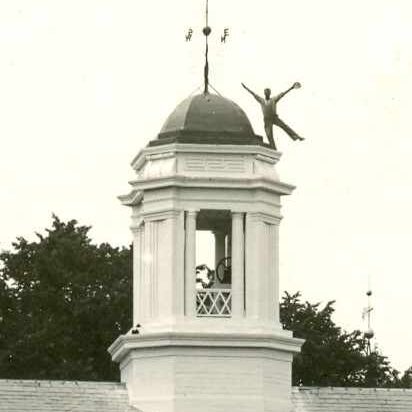
G.O.D. of the Rooftops: Belfast's Human Spider
George O. Dunbar, Belfast steeplejack made quite a name for himself in the early to mid-20th century. The Belfast Museum is fortunate to have photo-postcards and news articles depicting Mr. Dunbar and his various exploits.
Known to many as “Our George, the Human Spider,” he never passed up a dare to climb any building, steeple, or flagstaff in the city.
According to the newspaper account from July 1920 George Dunbar, Belfast’s high-climber, recently gilded the weather vane on the County Court House. Belfast photographer, M. A. Cook, captured that moment as Dunbar balanced on one foot, cap in hand, and printed it as postcard. The week before, Dunbar had climbed to the top of the slender flag staff on City Hall and adjusted the halyards. In 1922 it was reported that when George Polley the “Human Fly” visited Belfast and scaled the smooth brick surface of the Odd Fellows Building on upper Main Street, he was assisted by George Dunbar.
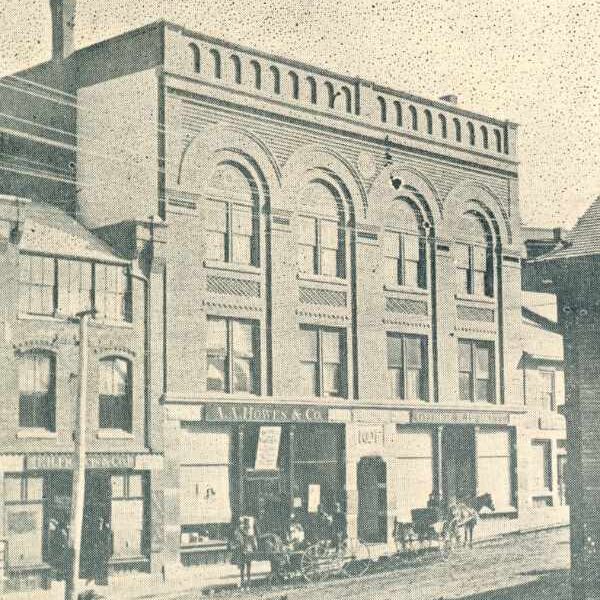
In November 1928, with an assistant and the use of a patent chimney cleaner, he succeeded in clearing creosote and soot from the chimney of the Woolworth Store, located in the Odd Fellows building on upper Main Street. According to the article,” Not being satisfied with removing the loose debris he was lowered down the chimney by his assistant to the depth of about fifty feet and in several places cut away what was adhering to the bricks.”
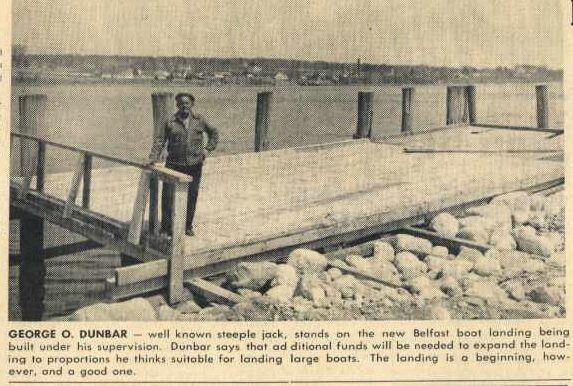 George O. Dunbar, known to family and friends as G. O. D. was born in Belfast in 1885 and died at his home on the Robbins Road in February 1971 at the age of 85.
One of his last projects was in May 1959, when, at age 71, he oversaw the construction of a new Belfast boat landing at the foot of Main Street.
BHSM Publications
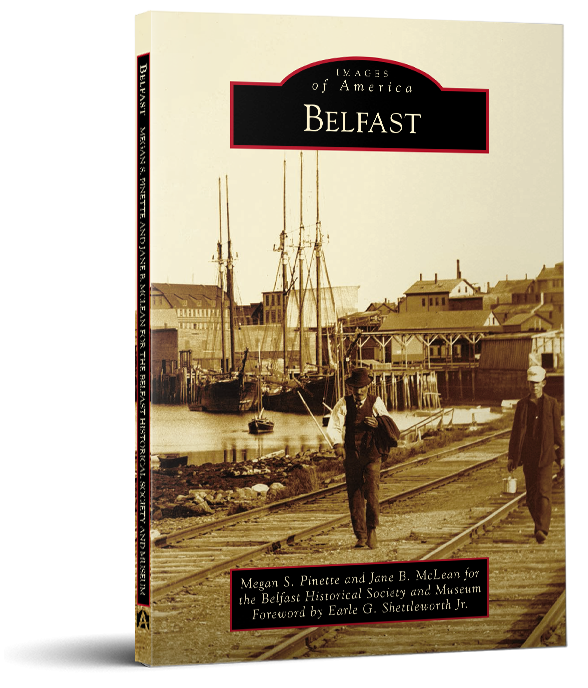
Introducing Belfast, our book in Arcadia’ Publishing’s Images of America series available for purchase summer 2020.
Co-authors Megan Pinette and Jane McLean have assembled informative and entertaining text with photographs from the Belfast Museum, Belfast Free Library and Penobscot Marine Museum collections. Earle G. Shettleworth, Jr, Maine State Historian, wrote the foreword.
The book highlights Belfast history from early settlement in 1770 to 1953, the year we celebrated 100 years as a City. Belfast will feature both photographs and text which highlight our history from 1770-1953. Chapters will include "Belfast Views", "Making A Living", "Home Sweet Home", "Celebrations" and more.
Images of America Belfast books are for sale at the museum and local booksellers. Books will be available for purchase at the museum, local outlets, and Amazon.
Watch the video about this exciting release!
Recent Donation
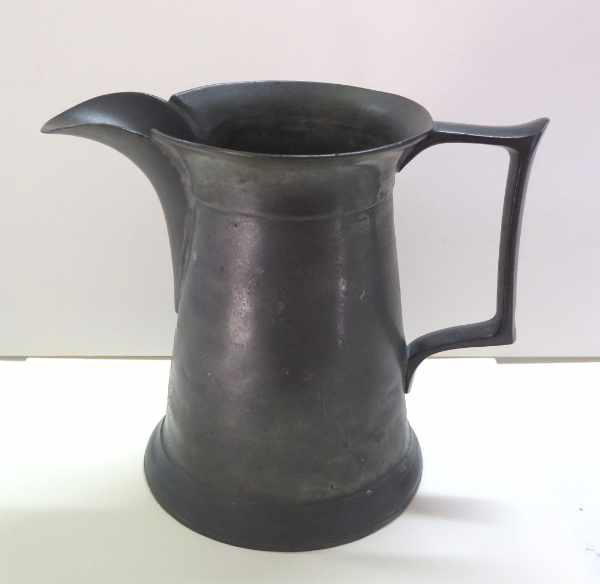
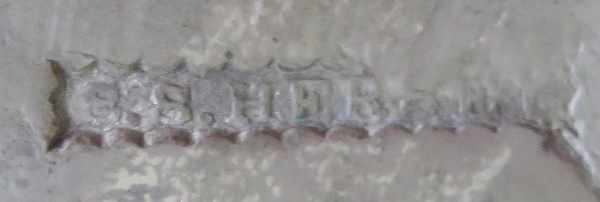
Samuel Stillman Hersey | 1808-1870
A Samuel S. Hersey water pitcher was recently donated to the Belfast Museum. The donation was made from the estate of Dr. Curt Morse of Searsport, a well-known bottle collector and collector of Hersey tinware. This pitcher was created ca. 1850 – 1855, height 7” and diameter 5.3”, its width (including the handle and spout) is 8.5”. By mid-summer 1850, Hersey had launched a Britannia manufacturing operation and won an award for his products at the Waldo County Agricultural Fair.
Samuel S. Hersey is a pewterer known to have worked in Belfast from 1840 until 1860. His main distinction is that he is thought to have been the northernmost pewterer whose work survives today. In the Maine Register of 1855, he is listed as “Brittania Ware” in Belfast. After 1860, he, and his son Samuel, Jr. were listed as tinsmiths in Belfast. The Hersey name is found on teapots, coffeepots, large pitchers, small beakers, and on at least one communion set. One of Hersey’s water pitchers is in the collection of the Maine State Museum in Augusta.
Hersey’s tinsmith shop, a modest wooden structure built in the early 1800s, was once located on the site of Hayford Hall, aka the Opera House, on Church Street. Following the great fire of October 1865, when the grocery business store of F. M. Lancaster was destroyed, it was relocated to the burned site at the SE corner of Main and Washington Streets. At that time, the building was lengthened by twenty feet. You will recognize it now as Traci’s Diner.
Belfast's Granite History
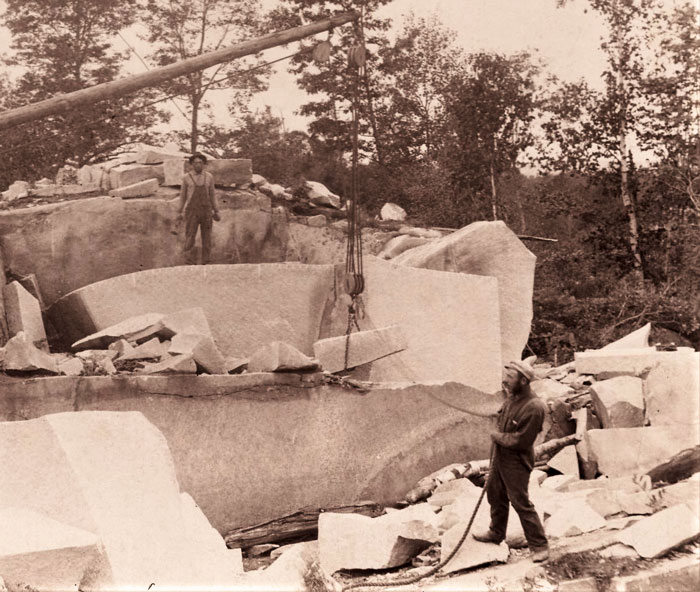
In recent years, Gary Stuckey and Douglas Pierce, two museum volunteers, researched the granite industry in Belfast.
Both men are retired geologists and were keen to do research on a subject not often written about. During their exploration, they employed resources found in the museum, these included maps, Belfast directories, photographs and archived news articles.
Download and read the result of their investigations:
Thank You, Volunteers!
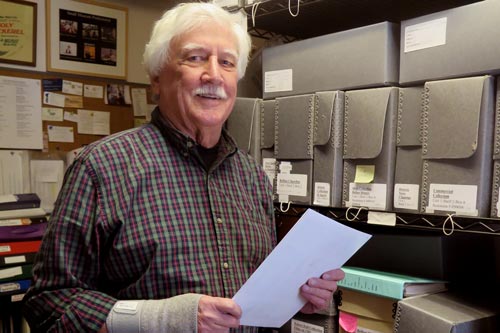
Gary Stuckey has been a volunteer at the Belfast Museum since moving to Belfast five years ago from Colorado where he served as a volunteer historic interpreter at the Tesoro Cultural Center. Since arriving he has researched the granite industry of Belfast, the upriver suburbs of Head of the Tide and City Point, and the history of the Goose River. He is a retired geologist and project manager for agencies in the U. S. Department of the Interior.
Your Old House
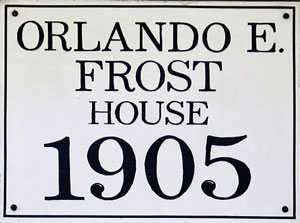
The Belfast Historical Society is offering Historic House Plaques.
The cost is $190.00 and includes a Membership in the Belfast Historical Society. This is an attractive product, and the offer is for everyone not just houses in the historic district.
The museum may be able to help you date your house and identify the original owner. A sample house marker can be seen on the museum building.
Belfast History is Your History!
We need your support to keep the Belfast Historical Society & Museum open and continue to preserve Maine's coastal history. Please consider a small donation.
Thank you!